A trader’s honest story about risk, discipline, and learning to survive funded trading
Pulkit did not wake up one morning deciding to become a funded trader. His journey began in an environment where trading conversations floated naturally through college corridors, where people from every level, from staff to students, discussed markets as casually as daily life. That atmosphere planted a thought that quietly stayed with him. If people from all walks of life could participate in trading, maybe he could too.
This is the story of a trader who moved from engineering textbooks to live charts, learning the hard lessons of discipline, risk, and self control along the way.
Pulkit began trading seriously after completing college around 2016 to 2017. What started as exposure to Indian markets eventually evolved into full time engagement with global forex markets.
Today, Pulkit trades funded accounts, manages risk with conscious self talk, and has experienced both deep drawdowns and meaningful payouts. His journey is far from perfect, and that is exactly what makes it relatable.
Pulkit’s first exposure to trading happened organically. In Gujarat, where he studied, trading culture was not limited to professionals. Students, faculty members, and even senior administrators openly discussed markets. Seeing this normalized trading as something achievable rather than exclusive.
After college, Pulkit entered Indian markets, trading indices and local instruments. He spent years understanding price behavior, volatility, and the emotional side of trading. During the COVID period, regulatory changes in India reshaped the landscape. With shifting rules and structures, Pulkit decided to look beyond domestic markets.
That transition led him first to US markets and eventually to forex, where liquidity, flexibility, and opportunity aligned more closely with his evolving trading style.
The major turning point came when a friend shared his experience with funded trading. The friend had purchased an account, traded it successfully, and received withdrawals. That real world proof mattered. It was not marketing. It was trust built through observation. Pulkit decided to step in.
Pulkit’s funded trading journey did not begin smoothly. He initially started with a smaller 10k account. It took him nearly 29 days to pass the challenge, which taught him patience and respect for rules.
Soon after, he attempted a larger 100k account. This is where one of his most painful mistakes happened. Trading both accounts on the same mobile device, he mistakenly placed large position sizes intended for the 100k account into the 10k live account. The result was a complete wipeout of the smaller account.
The firm notified him officially. The loss was real. Instead of quitting, Pulkit treated it as tuition paid to the market.
The second attempt at the 100k account went better. Having already internalized the rules and emotional pressure, he passed the challenge in about 21 days. That experience reinforced a critical lesson. Starting small is not a weakness. It is preparation.
Pulkit does not confine himself to a single session. His routine is built around session overlaps, where liquidity and institutional activity are clearer.
He actively watches the overlap between Sydney and Tokyo sessions from around 7:00 to 9:00 am IST. In his experience, these hours often show cleaner price behavior and less random manipulation.
Later in the day, he trades again during the London and New York overlap, typically between 8:30 and 9:30 pm IST. This approach allows him to participate in moments where volume and intent align, rather than forcing trades during low activity periods.
He trades selectively and believes timing matters as much as direction.
Pulkit openly admits that greed has been his biggest weakness. Even after hitting his planned targets, he sometimes felt the urge to squeeze a few more points from the market. Watching price extend beyond his exit created internal conflict.
This behavior occasionally led to giving back profits or reducing otherwise clean wins.
His solution was simple but not easy. Once a trade hits target or stop loss, he closes the terminal. He removes the temptation entirely. He reminds himself that something is always better than nothing and that self talk is a trader’s most important tool.
Breaking personal rules, he noticed, always resulted in punishment from the market. Following them did not guarantee profit, but it protected him from emotional damage.
The funded trading structure played a key role in shaping Pulkit’s discipline. Having clear drawdown limits and objective performance tracking forced him to confront reality rather than excuses.
He became aware of his risk profile and recognized himself as a high risk trader. Seeing this reflected in performance metrics helped him redefine his system after experiencing his worst losing streak.
During one phase, he approached dangerously close to account washout, dropping from an 8 percent gain to nearly breaching the maximum drawdown. A single controlled positive trade helped him stabilize mentally. From there, he slowly rebuilt and eventually climbed back to a peak near 11 percent growth.
That recovery reshaped his respect for controlled risk and emotional regulation.
One statement captures Pulkit’s mindset clearly:
“Even fifty dollars in profit is enough if it breaks a losing streak. Mental recovery matters more than money recovery.”
This belief guides his actions during drawdowns. Rather than chasing recovery in one trade, he reduces lot size, aims for small clean wins, and focuses on rebuilding confidence before rebuilding equity.
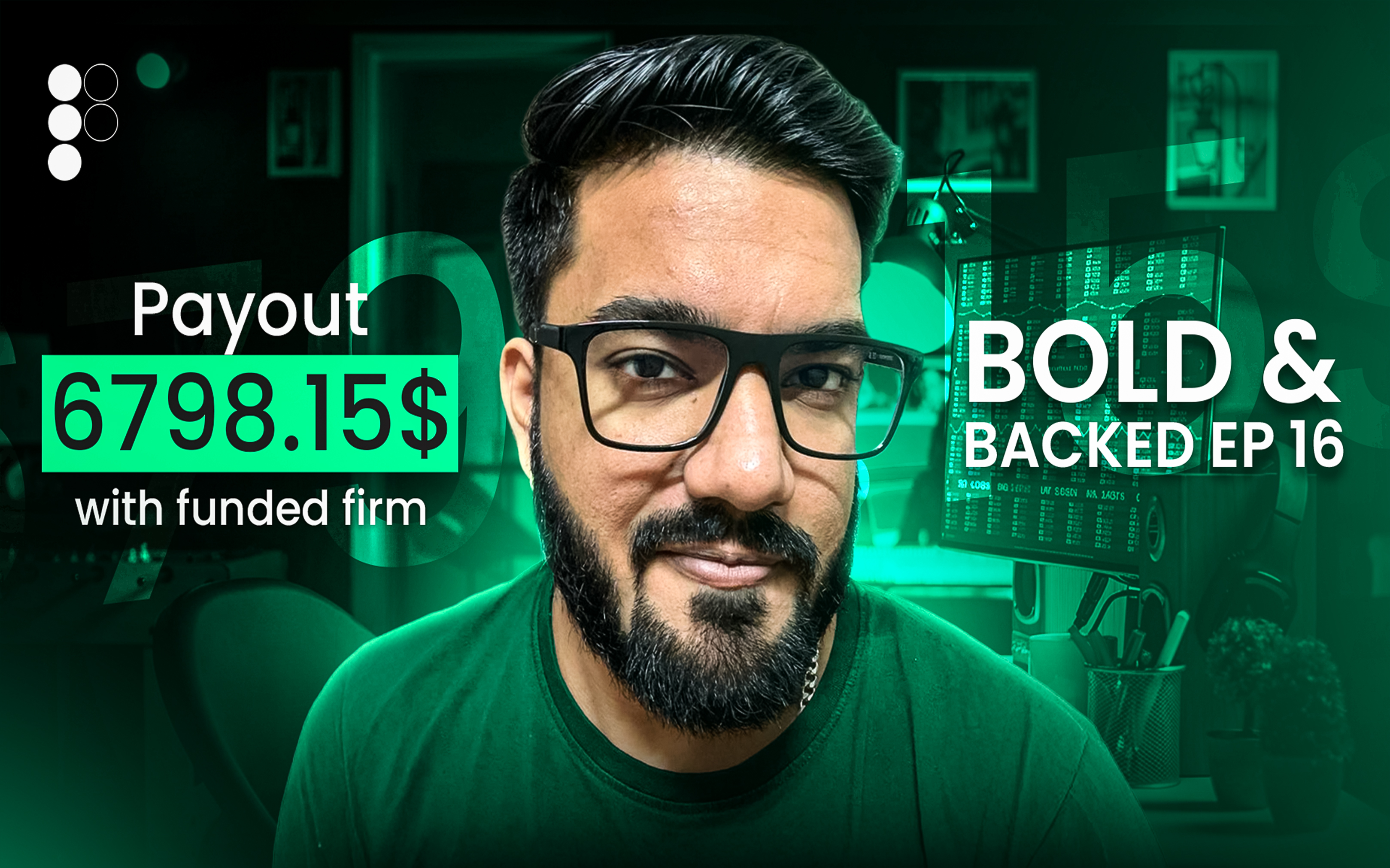
Pulkit’s highest drawdown reached approximately 2,790 dollars during a period of emotional conflict and oversized positions. His biggest payout reached around 6,700 dollars, though at one point unrealized profits were closer to 11,000 dollars before consistency rules and overtrading reduced the final payout amount.
He openly acknowledges that stopping earlier could have preserved nearly 9,900 dollars. That awareness is now part of his growth.
These numbers are not shared as bragging rights, but as honest markers of progress, mistakes, and lessons learned.
After receiving a payout, Pulkit does not rush back into markets. He believes in celebrating the result. He takes a full week off, spends time with friends, attends social events, and disconnects mentally.
This break resets his psychology. Only after feeling refreshed does he return to charts with a clear head. For him, trading is not just about profits. It is about sustainability.
Pulkit encourages new traders to focus on payouts, not account fees. His advice is practical. Aim for the minimum payout first. Build confidence. Let proof replace hope.
He emphasizes that markets are unpredictable. Unexpected statements, political decisions, or global events can reverse any setup. Because of that, protecting the account matters more than chasing perfect trades.
Even a 0.1 percent daily gain, he believes, compounds not just equity but confidence.
Pulkit’s journey is not polished or perfect. It is real. It includes mistakes, recoveries, emotional battles, and personal discipline built through experience.
His story reminds traders that funded success is not about flawless execution. It is about surviving mistakes, learning from them, and staying consistent long enough to grow.
Thank you, Pulkit, for sharing a journey that many traders quietly live. Your experience inspires persistence, patience, and respect for the process.
Get funded today and start achieving your financial goals.

Be the first to know about promotions and discount
Ensure you manage your risk by never exceeding the set drawdown limits. Protect your capital and trade with discipline to preserve long-term profitability.
Achieve consistent profitability by adhering to your trading plan. Fundedfirms typically require a minimum monthly profit target to maintain funding and access to capital.
Follow the firm's guidelines regarding trading strategies, including asset types and trade volume. Staying compliant ensures you remain within the terms of the agreement and avoid penalties.



Trading involves risk and may not be suitable for all individuals. FundedFirm offers skill-based evaluations using simulated trading accounts only. Past performance does not guarantee future results. Funding and payouts are subject to program rules and compliance.
FundedFirm LTD. does not provide services for citizens/residents of the USA, Cuba, Iraq, Myanmar, North Korea, Sudan, Iran, Russia. The services of FundedFirm LTD. are not intended for distribution to, or use by, any person in any country or jurisdiction where such distribution or use would be contrary to local law or regulation.